Showing posts with label Women's Health. Show all posts

Monday, 4 July 2011

Normal Menstrual Cycle - Topic Overview

Normal Menstrual Cycle - Topic Overview
What is a menstrual cycle?
The menstrual cycle is the series of changes a woman's body goes through to prepare for a pregnancy. About once a month, the uterus grows a new lining (endometrium) to get ready for a fertilized egg . When there is no fertilized egg to start a pregnancy, the uterus sheds its lining. This is the monthly menstrual bleeding  (also called menstrual period) that women have from their early teen years until menopause, around age 50.

The menstrual cycle is from Day 1 of bleeding to Day 1 of the next time of bleeding. Although the average cycle is 28 days, it is perfectly normal to have a cycle that is as short as 21 days or as long as 35 days.1 For a teen, a normal cycle can last up to 45 days.2

Girls usually start having menstrual periods between the ages of 11 and 14. Women usually start to have fewer periods between ages 39 and 51. Women in their 40s and teens may have cycles that are longer or change a lot. If you are a teen, your cycles should even out with time. If you are nearing menopause, your cycles will probably get longer and then will stop.

Talk to your doctor if you notice any big change in your cycle. It’s especially important to check with your doctor if you have three or more cycles that last longer than 7 days or are very heavy. Also call if you have bleeding between your periods or pelvic pain that is not from your period.

What controls the menstrual cycle?
Your hormones control your menstrual cycle. During each cycle, your brain's hypothalamus and pituitary gland send hormone signals back and forth with your ovaries. These signals get the ovaries and uterus ready for a pregnancy.

The hormones estrogen and progesterone play the biggest roles in how the uterus changes during each cycle.

   *Estrogen builds up the lining of the uterus.
   *Progesterone increases after an ovary releases an egg (ovulation) at the middle of the cycle. This helps the estrogen keep the lining thick and ready for a fertilized egg.
   *A drop in progesterone (along with estrogen) causes the lining to break down. This is when your period starts.
A change in hormone levels can affect your cycle or fertility. For example, teens tend to have low or changing progesterone levels. This is also true for women close to menopause. That is why teens and women in their 40s may have heavy menstrual bleeding and cycles that change in length.

Other things can change your cycle. They include birth control pills, low body fat, losing a lot of weight, or being overweight. Stress or very hard exercise also can change your cycle. Pregnancy is the most common cause of a missed period.

What common symptoms are linked to the menstrual cycle?
Some women have no pain or other problems. But other women have symptoms before and during their period.

For about a week before a period, many women have some premenstrual symptoms. You may feel more tense or angry. You may gain water weight and feel bloated. Your breasts may feel tender. You may get acne. You also may have less energy than usual. A day or two before your period, you may start having pain (cramps) in your belly, back, or legs. These symptoms go away during the first days of a period.

When your ovary releases an egg in the middle of your cycle, you may have pain in your lower belly. You also might have red spotting for less than a day. Both are normal.

How can women take care of bleeding and symptoms?
You can use pads or tampons to manage bleeding. Whichever you use, be sure to change the pad or tampon at least every 4 to 6 hours during the day. Pads may be best at night.

Many women can improve their symptoms by getting regular exercise and eating a healthy diet. It also may help to limit alcohol and caffeine. Try to reduce stress.

A heating pad, hot water bottle, or warm bath also can help with cramps. You can take an over-the-counter medicine such as ibuprofen or naproxen before and during your period to reduce pain and bleeding

Ovarian Pain: Possible Causes, Diagnosis, and Treatments

Ovarian Pain: Possible Causes, Diagnosis, and Treatments
The ovaries are an important part of the female reproductive system. Their job is twofold. They produce the hormones, including estrogen, that trigger menstruation. They also release one egg each month for possible fertilization.

A number of different conditions, from cysts to tumors, can cause ovarian pain. The ovaries are located in the lower abdomen. That means if you have ovarian pain, you'll most likely feel it in your lower abdomen -- below your belly button -- and pelvis. It's important to have any pelvic pain checked out by your regular doctor or obstetrician/gynecologist. Several different conditions can cause it.

Women’s Health Slideshows

From fighting fatigue to keeping your weight in check, look and feel better with these visual guides to better understanding your health.
Energy Foods
Weight Gain Shockers
The 30-Minute Workout Routine
Spider and Varicose Veins
Your Skin: A Window to Your Health
© 2009 WebMD, LLC. All rights reserved.
Pain in the ovaries can either be acute or chronic. Acute ovarian pain comes on quickly (over a few minutes or days) and goes away in a short period of time. Chronic ovarian pain usually starts more gradually. Then it last for several months.

Ovarian pain may be continuous. Or it may come and go. It may get worse with certain activities, such as exercise or urination. It can be so mild that you don't notice it. Or pain in the ovaries can be so severe that it interferes with your daily life.

The methods your doctor uses to diagnose ovarian pain will vary. They will be based on what the suspected cause might be. Regardless, your doctor will take a complete medical history, do a physical exam, and ask you questions about your pain. The questions might include:

 *Where are you feeling the pain?
 *When did it start?
 *How often do you feel pain?
 *Does an activity make the pain better or worse?
 *How does it feel -- mild, burning, achy, sharp?
 *How does the pain affect your day-to-day life?

Diagnostic tests, such as ultrasound and other types of imaging, can home in on the cause of the pain. Here is a rundown of some possible causes of ovarian pain and how they are diagnosed and treated.

Cause of Ovarian Pain: Ovarian Cysts

Cysts are fluid-filled sacs that can form in the ovaries. They are very common in women, especially during the childbearing years. Often they form during the process of ovulation. It can happen when the egg is not released or when the sac -- follicle -- holding the egg doesn't dissolve after the egg is released. Ovarian cysts usually cause no symptoms. They can, though, create a dull ache or a sharp pain if one twists or ruptures.

Other symptoms of ovarian cysts:
Irregular menstrual periods
Pain during intercourse or bowel movements
Nausea or vomiting
Feeling full after eating a small amount
Bloating

How ovarian cysts are diagnosed
Pelvic exam. This exam may reveal a lump in the pelvic area.
Ultrasound. This scan uses sound waves to create an image of the ovaries. This helps the doctor determine the size and location of the cyst.

Treatment of ovarian cysts
 *Watchful waiting. Most ovarian cysts will go away on their own. If you don't have any bothersome symptoms, especially if you haven't yet gone through menopause, your doctor may advocate "watchful waiting." The doctor won't treat you. Instead, the doctor might check you periodically to see if there has been any change in the cyst.
 *Laparoscopy. This is a form of surgery that uses small incisions and a tiny, lighted camera on the end of a plastic tube that's inserted into the abdomen. A surgeon can use tools on the end of the tube to remove some cysts. This technique works for smaller cysts. Larger cysts, though, may need to be removed through a bigger incision in the abdomen. This is done with a technique called laparotomy.
 *Birth control pills . Birth control pills may relieve the pain from ovarian cysts. They prevent ovulation. That, in turn, reduces the formation of new cysts.

Cause of Ovarian Pain: Ovarian Tumors
Tumors can form in the ovaries, just as they form in other parts of the body. They can be either noncancerous (benign) or cancerous (malignant).

Other symptoms of ovarian tumors
Bloating or pressure in the abdomen
Urgent need to urinate
Indigestion
Diarrhea or constipation
Loss of appetite
Unintentional weight loss or gain

How ovarian tumors are diagnosed
 *Computed tomography (CT), magnetic resonance imaging (MRI), and positron emission tomography (PET). These are detailed imaging scans that the doctor can use to find ovarian tumors. They allow the doctor to determine whether and how far the ovarian tumors have spread.
 *CA-125. This is a blood test to look for a protein that tends to be higher in some (but not all) women with ovarian cancer. CA-125 isn't effective as a screening test for ovarian cancer. But it can be checked in women with symptoms that might be caused by ovarian cancer.

Treatment of ovarian tumors
 *Laparotomy. This is surgery performed through an incision into the abdomen. The surgeon will remove as much of the tumor as possible. The removal of tumor tissue is called debulking. If the tumor is cancerous and has spread, the surgeon may also remove the ovaries, uterus, fallopian tubes, omentum (fatty tissue covering the intestines), and nearby lymph nodes.
 *Chemotherapy. Chemotherapy involves drugs given through a vein (IV), by mouth, or directly into the abdomen. The drugs kill cancer cells. Because they kill normal cells as well, chemotherapy medications can have side effects. These can include nausea and vomiting, hair loss, kidney damage, and increased risk of infection. These side effects should go away after the treatment is stopped.
 *Radiation. This treatment uses high-energy X-rays to kill or shrink cancer cells. Radiation is either delivered from outside the body, or placed inside the body near the site of the tumor. This treatment also can cause side effects. These can include inflamed skin, nausea, diarrhea, and fatigue. Radiation is not often used to treat ovarian cancer.

Cause of Ovarian Pain: Endometriosis
Every month, the lining of the uterus builds up in preparation to nourish a growing fetus. When an egg is not fertilized, that lining sheds and is released from the body via menstruation. In some women, tissue like the lining of the uterus develops elsewhere in the body. This tissue swells and bleeds each month. It has nowhere to shed, though, and so it forms scar tissue and can be very painful.

Other symptoms of endometriosis
Painful periods
Pain during intercourse
Heavy menstrual periods
Infertility

How endometriosis is diagnosed
Ultrasound and MRI. These scans create images of the ovaries to help the doctor spot endometriosis.
Laparoscopy. This procedure uses a thin lighted scope inserted into a tiny hole in the abdomen to allow the doctor to visualize the ovaries. The doctor may possibly remove a small sample of tissue for biopsy.

Treatmentof endometriosis
  *Pain medications. Drugs such as ibuprofen (Advil, Motrin) can help relieve some of the discomfort of endometriosis.
Birth control pills. The pillprevents the monthly buildup of uterine tissue on the ovaries. This makes periods lighter and reduces the symptoms of endometriosis.
  *Gonadotropin-releasing hormone agonists (GnRH agonists). These drugs reduce the amount of the hormone estrogen in the body. By slowing the growth of endometriosis, they limit its symptoms.
  *Laparoscopy and laparotomy. These are surgical procedures that let the doctor remove endometriosis on the ovaries and other places. If the endometriosis is extensive, the doctor may recommend a hysterectomy. This procedure removes the uterus and sometimes also the ovaries and fallopian tubes.

Cause of Ovarian Pain: Pelvic Inflammatory Disease
Pelvic inflammatory disease (PID) is an infection in the ovaries, uterus, or fallopian tubes. It is most often caused by sexually transmitted diseases like gonorrhea or chlamydia. It is one of the most common causes of pelvic pain in women.

Other symptoms of PID
Pain during intercourse
Fever
Vaginal discharge that may have a smell
Irregular menstrual bleeding
Diarrhea
Vomiting
Fatigue
Difficulty urinating

How PID is diagnosed
Pelvic exam. The exam will enable your doctor to look for any lumps, abnormal discharge, or tenderness in your pelvis.
Blood and urine tests. These laboratory tests can help identify the infection. So can cultures of any discharge seen during a pelvic exam.
Ultrasound. This test creates an image of the pelvic area so the doctor can see if the reproductive organs are enlarged. The doctor can also see if there is a pocket of infection known as an abscess.
Laparoscopy. Occasionally this procedure, which uses a thin lighted scope inserted into a tiny hole in the abdomen, is used to confirm the diagnosis.

Treatment of PID
Antibiotics. These drugs are given by mouth or through an injection. They can kill the bacteria that are causing PID. If you are taking antibiotics for PID, your sexual partner or partners should also get treated. There is a high likelihood that your partner has the same sexually transmitted infection.

Cause of Ovarian Pain: Ovarian Remnant Syndrome

Surgery to remove the uterus and ovaries is known as hysterectomy and oophorectomy. A bilateral salpingo oophorectomy is a procedure in which both fallopian tubes and ovaries are removed. In rare cases, a small piece of the ovary may accidentally be left behind. The remnant can grow and develop painful cysts.

Other symptoms of ovarian remnant syndrome
Pain during intercourse
Difficulty urinating

How ovarian remnant syndrome is diagnosed
Ultrasound, CT, and MRI. These scans create images of the area. They help the doctor locate the remaining piece of ovary tissue.


Treatment of ovarian remnant syndrome
Laparotomy or laparoscopy. These procedures are done to remove the remaining piece or pieces of ovary.

Bumps on the genital area that bleed

Genital Herpes - Topic Overview
What is genital herpes?
Genital herpes is one of the most common sexually transmitted infections (STIs). The infection can be bothersome. But if you are a healthy adult, you do not need to worry that it will cause serious problems for you.

Most people never have symptoms, or the symptoms are so mild that people do not know that they are infected. But in some people, the infection causes occasional outbreaks of itchy and painful sores in the genital area.

After the first outbreak, the herpes virus stays in the nerve cells below the skin and becomes inactive. It usually becomes active again from time to time, traveling back up to the skin and causing more sores. Things like stress, illness, a new sex partner, or menstruation may trigger a new outbreak. As time goes on, the outbreaks happen less often, heal faster, and don't hurt as much.

What causes genital herpes?
Genital herpes is caused by a virus-either the herpes simplex virus type 1 or the herpes simplex virus type 2. Either virus can cause sores on the lips (cold sores) and sores on the genitals. Type 1 more often causes cold sores, while type 2 more often causes genital sores.

What are the symptoms?
Symptoms can vary greatly from person to person. Most people never have any symptoms. Sometimes the symptoms are so mild that people may not notice them or recognize them as a sign of herpes. For people who do notice their first infection, it generally appears about 2 to 14 days after they were exposed to genital herpes.

Some people have outbreaks of itchy and painful blisters  on the penis or around the opening of the vagina. The blisters rupture and turn into oozing shallow sores that take up to 3 weeks to heal. Sometimes people, especially women, also have flu-like symptoms, such as fever, headache, and muscle aches. They may also notice an abnormal discharge and pain when they urinate.

Genital herpes infections can be severe in people who have impaired immune systems, such as people with HIV.

How is genital herpes diagnosed?
Your doctor may diagnose genital herpes by examining you. He or she may ask you questions about your symptoms and your risk factors, which are things that make you more likely to get a disease.

If this is your first outbreak, your doctor may take a sample of tissue from the sore for testing. Testing can help the doctor be sure that you have herpes. You may also have a blood test.

How is it treated?
Although there is no cure, medicine can relieve pain and itching and help sores heal faster. If you have a lot of outbreaks, you may take medicine every day to keep the number of outbreaks down.
After the first outbreak, some people have just a few more outbreaks over their lifetime, while others may have 4 to 6 outbreaks a year. Usually the number of outbreaks decreases after a few years.

Treatment works best if it is started as soon as possible after the start of an outbreak. This is especially true for outbreaks that come back again and again.

Finding out that you have herpes may cause you to feel bad about yourself or about sex. Counseling or a support group may help you feel better.

Can genital herpes be prevented?
The only sure way to keep from getting genital herpes-or any other sexually transmitted infection (STI)-is to not have sex. If you do have sex, practice safe sex.

Saturday, 18 June 2011

The Worst Shoes for Your Feet

Reviewed by Louise Chang, MD on May 11, 2011
Source: WebMD

Culprit: Ultra-High Heels
"Heels are getting higher and higher," says Hillary Brenner, DPM. "We podiatrists like to call it shoe-icide." Brenner, a spokeswoman for the American Podiatric Medical Association, says ultra-high heels can lead to everything from ankle sprains to chronic pain.  Let's take a closer look at the heights, styles, and woes of today's footwear.

Problem: Pump Bump
Whether they're sky-high or mid-heel, this style is notorious for causing a painful knot on the back of the heel. The rigid material presses on a bony deformity some women have called a "pump bump."  The pressure leads to blisters, swelling, bursitis, even pain in the Achilles tendon.  Ice, orthotics, and heel pads may provide pain relief …along with better shoes. The bony protrusion is permanent.

Problem: Unnatural Foot Position
Ultra-high heels force the feet into a position that puts stress on the ball of the foot.  At this critical joint, the long metatarsal bones meet the pea-shaped sesamoid bones, and the toe bones (phalanges). Too much pressure can inflame these bones or the nerves that surround them. Chronic stress to the foot bones can even lead to hairline fractures.

Solution: Go Low
Switching to lower heels will help you avoid problems with the metatarsal bones. The lower you go, the more natural your foot position will be. Brenner recommends choosing heels that are no more than 2 inches high -- and even those should be worn in moderation.

Problem: Ankle Sprains
All high heels boost the risk of an ankle sprain. The most common problem is a lateral sprain, which happens when you roll onto the outside of your foot. This stretches the ankle ligaments beyond their normal length. A severe sprain may tear the ligaments. A sprained ankle should be immobilized and may need physical therapy to heal properly. The risk of developing osteoarthritis rises with a severe sprain or fracture of the ankle.

Culprit: Stilettos
Although all high heels can cause problems, the ultra narrow heels of stilettos are particularly risky. "The weight is pinpointed on one area," Brenner tells WebMD. "That makes you wobble like you're walking on stilts." The result is that you're more likely to trip and sprain your ankle.

Solution: Chunky Heels
A chunky heel has more surface area and distributes your weight more evenly. This makes the feet much more stable when compared to stilettos or spindle heels. Although thick high heels can still put stress on the ball of your foot, they may reduce the tripping hazard by minimizing your wobble.

Culprit: Ballet Flats
Brenner compares these dainty shoes to walking on cardboard. "There's no arch support whatsoever," she tells WebMD. That keeps the feet from functioning optimally and can lead to knee, hip, and back problems. Poor arch support is also associated with a painful foot condition called plantar fasciitis.

Solution: Orthotic Inserts
If you love the look of ballet flats, over-the-counter inserts (shown here) may help prevent mild foot pain. Heel pads can provide extra cushioning for achy heels. And custom orthotics can ease a whole range of foot pains and problems. Podiatrists prescribe these inserts to provide arch support and reduce pressure on sensitive areas. Prescription orthotics can be pricey, but are sometimes covered by insurance.

Culprit: Flip-Flops
Flip-flops offer very little protection. The risk of getting splinters or other foot injuries is higher when the feet are so exposed. People with diabetes should not wear flip-flops, because simple cuts and scrapes can lead to serious complications. In addition, many flip-flops provide no arch support. Like ballet flats, they can aggravate plantar fasciitis and cause problems with the knees, hips, or back.

Problem: Plantar Fasciitis
A band of tissue called the plantar fascia runs along the bottom of the foot. It pulls on the heel when you walk -- and it works best with the proper arch in your foot. Walking barefoot, or in flimsy shoes without sufficient arch support, can overstretch, tear, or inflame the plantar fascia. This common condition can cause intense heel pain, and resting the feet only provides temporary relief.

Better: 'Fitted' Flops
Sporty, fitted sandals and other "toning shoes" are designed for a more intense workout while walking. The American Council on Exercise says there's no evidence to support that claim, but they may have other benefits. The thick sole keeps your foot off the ground and away from debris. And Brenner points out, "they do have really good arch support." Several have a seal of approval from the American Podiatric Medical Association.

Culprit: Platform Shoes
Platform shoes and wedges tend to have rigid foot beds. "That throws off the biomechanics of walking," Brenner says. "Your foot is trying to bend a certain way, but the shoe is fighting you because it's so rigid." If the heel of the platform is much higher than the toe area, the shoe also puts pressure on the metatarsal bones.

Better: Flatter Platforms
Although still not recommended, a flatter platform shoe may put less strain on your feet than its peers. Look for a wide wedge or platform that is nearly parallel with the ground. This will lessen the pressure on the ball of the foot. However, the rigid sole remains a barrier to the natural walking motion.

Culprit: Pointy Toes
They might be stylish, but shoes with pointy toes squeeze the entire front of your foot together. After time, this can cause nerve pain, bunions, blisters, and hammertoes. Some women even develop bruises under their toenails from the constant pressure.

Problem: Bunions
A bunion is a painful lump at the base of the big toe, which may cause the toe to bend unnaturally. It forms when the tissue or bone at the base joint gets displaced. This may happen after years of abnormal pressure and movement. Pointy-toed shoes are a common factor, which explains the prevalence of bunions among women.

Problem: Toe Deformities
High heeled shoes push too much body weight toward the toes and then squeeze them together. Over time, the result can be hammertoe (early stage, lower right), abnormal bends in the toe joints that can gradually become rigid. Surgery is sometimes needed to relieve the pain of severe hammertoe. Crowding can cause other toe deformities, along with continuous shoe friction, leading to painful corns and calluses.

Solution: Wide Toe Box
You can avoid the pointy toe perils by selecting boxier shoes. If that style doesn't appeal to you, look for shoes that slope to a point beyond the edge of your toes. A healthy style won't pinch the tips or sides of your toes. Brenner also suggests choosing a softer material, rather than stiff leather.

Culprit: Celebrity Trendsetters
Lady Gaga is known for her eccentric style, but you may want to think twice before stepping into the heel-less shoes she favors. The 12-inch mega-heels seen in her "Bad Romance" video are equally risky. As we've seen, putting so much stress on the ball of your foot can cause bone and nerve damage and pain.

Solution: Performance Pumps
Many women are unwilling to trade style for comfort, but you may not have to choose between the two. Performance pumps offer a sound compromise, taking both fashion and your health into consideration. They are typically made with reinforced heels, athletic shoe construction, and more wiggle room for your toes.

Culprit: Wrong Size Shoes
Nine out of 10 women are wearing shoes that are too small. The consequences aren't pretty – calluses, blisters, bunions, corns, and other problems. The constant rubbing can irritate the joints in the foot and lead to arthritis. Research suggests many kids are also wearing the wrong shoe size, which puts them at risk for foot deformities as they grow.

Solution: Measure Your Feet
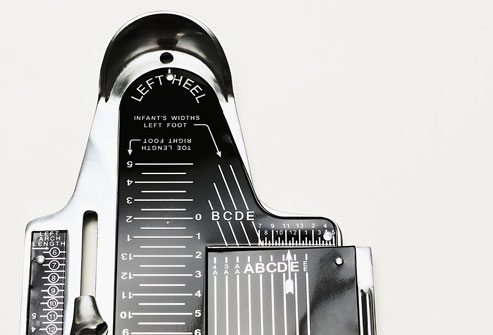
Before buying new shoes, have a professional measure the length and width of your feet at the end of the day, while you're standing. For unusually flat feet or high arches, an exam by a podiatrist may be warranted. These conditions can increase the risk of osteoarthritis. Early treatment and use of proper footwear may help to avoid unnecessary wear and tear on the joints of the foot.

Men's Trends
Pointy-toed shoes have crossed the gender line. This footwear fad carries the same risk in men as in women – including hammertoes, bunions, and pain. To avoid these problems, stick with a boxier toe. At the office, a classic pair of oxfords or loafers may not turn heads, but your feet will thank you.

Fitness Trends: Minimalist Shoe
Newer additions to the shoe scene are minimalist shoes. They aim to mimic the natural feel and mechanics of walking barefoot. Brenner is not impressed. "There's no support for your heel or arch and no shock absorption," she says. In addition, in some brands, the "fingers" separate the toes, interfering with the natural walking position.

Fitness Trends: Rocker Bottoms
Rocker bottom shoes facilitate the push-off motion as you walk. This style can help with joint pain, according to Brenner. It's also good for people with mild foot deformities. However, she does not recommend the shoe for older people or people with medical conditions that affect balance or muscle strength.

3 Tips for Better Shoes
If you're ready to do right by your feet, Brenner offers these three tips:
*Make sure the shoe bends at the toe box, but is not too flexible.
*Make sure there is a sufficient arch support.
*Choose a chunky heel that is less than 2 inches high.

Sunday, 12 June 2011

Tips to Fight Fatigue, Bloat, and Stress

Reviewed by Brunilda Nazario, MD on July 17, 2009
Source: 2009 WebMD

Shake the Salt Habit
Feeling bloated? Salt may be partly to blame. Too much salt can cause you to retain water. And it can contribute to high blood pressure. Cut back on salt by choosing fresh (not canned or processed) foods and experimenting with other seasonings such as curry powder, garlic, cumin, or rosemary to give your food some zing. You’ll expand your culinary horizons and feel more energetic, too.

Stressed? Climb the Stairs
When you're angry or stressed, it's easy to grab a candy bar, smoke a cigarette, or gulp another cup of coffee to cope. The ideal antidote? Exercise. Next time you're stressed out or riled up, climb a flight of stairs (or two) or go for a quick stroll -- studies show even 10 minutes of exercise can provide a mental boost.

Put Down That Doughnut
Handle stress by eating? In tense times, you may choose comfort foods over fruits and vegetables. But when that rush from refined carbs or sugary food crashes, you’ll be left feeling sluggish. Plus, extra calories can quickly add up to extra pounds -- increasing your risk for health problems. So next time you feel anxious, ignore the sweet stuff. Try munching on an apple or just take 10 deep breaths instead.

Get Your Beauty Sleep
Banish under-eye bags by hitting the hay. Experts recommend 7 to 8 hours of sleep a night to recharge and lower stress. Having trouble falling asleep? Don't drink caffeine past noon. Avoid exercise two hours before bedtime. Make your bedroom a sleep-only zone -- no TVs, computers, or other distractions. If these tips don't work, talk to your doctor.

Get Out of That Rut
Mixing it up, whether by altering your routine or trying something new -- like changing your hairstyle -- can improve your outlook and mood. Driving a new route to work, walking the dog down a different street, or eating a new food for breakfast can help keep things fresh. Focus on one easy-to-accomplish change at a time to ensure success.

Walk Around the Block
You don't have to spend hours at the gym -- even a little movement can get you in touch with your body and help you regain your energy. A simple walk around the block can clear your head, and exercises that involve a bit of meditation -- such as yoga or tai chi -- can help recharge both your body and your mind.

Eat More Fiber
Fiber can help you feel fuller faster so you eat less and lose weight. Getting enough fiber also keeps you regular and is good for your heart. So in addition to the health benefits, getting enough fiber can result in fewer things to be stressed about! The good news is that fiber comes in many tasty forms, from oatmeal and whole-grain breads and cereals to fruits such as apples, citrus, and strawberries, and almost any vegetable.

Focus on the Present
Being aware of where you are and what is happening right now -- some call it mindfulness -- can help you relax instead of fretting over what's looming on the horizon. Let go of thoughts about the past or future, and focus on the present moment. How does the air feel against your skin? How does the pavement feel under your feet? If your mind wanders, just bring it back again to focus on the present.

Call the Doctor
We’ve all done it -- tried to ignore that miserable headache, persistent shoulder pain, or nagging cough. But ongoing health problems can sap vitality. Resolve to get your symptoms checked out by a physician. If you haven’t had a physical in a while, schedule one now. And if you feel mental health care is in order, don’t be afraid to discuss that with your doctor, too.

Feed Your Head
Sometimes the answer to having a lot on your mind is to do something that takes your brain in a completely different direction. Stretch your mental boundaries by listening to a lecture on your iPod, doing a crossword puzzle, or joining a book club and checking out the latest best seller. Or take up a new hobby that keeps you active mentally and physically, whether it's gardening or hiking.

Saturday, 4 June 2011

25 Ways to Get Ready for Swimsuit Season

Reviewed by Louise Chang, MD on April 04, 2011
Source: 2011 WebMD

Improve Your Posture
Good posture is the quickest, easiest way to look better -- and several pounds thinner -- in your favorite bikini.  Slouching takes inches off your height and makes your tummy look rounder. Practice good posture by keeping your back straight and your shoulders back. Distribute your weight evenly on both hips. Your body, and your reflection, will thank you.

Start Moving
In the weeks before swimsuit season, aim to move your body more. "It's like putting pennies in a piggy bank," says Pamela Peeke, MD, author of Body for Life for Women. "Every single piece of physical activity adds up." So turn on some music and dance. Try a Zumba class. Use the stairs at work. Every ounce of sweat will bring you closer to your goal.

Toning Timesaver: Push-Ups
To help get your body bikini-ready, "why not multitask?" suggests Peeke, who is an expert blogger for WebMD. "Push-ups are my No. 1 favorite because you can hit six muscles at once: biceps, triceps, deltoids, pecs, abs, and gluteals." Start with a bent-knee push-up, and have a trainer watch once to check your form. If you have a medical condition, get a doctor's OK before starting a new exercise program.

Toning Timesaver: Squats
For the butt and thighs, Peeke recommends squats. A simple way to do these is to squat against a wall or an exercise ball, into an invisible chair.  Keep your feet hip-width apart, and squeeze your abs to avoid arching your back. As you become stronger, you can hold dumbbells to increase the intensity. Aim for 3 sets of 6-12 repetitions.
Note: If any exercise doesn't feel right, stop and check with a fitness pro.  Depending on your condition, some exercises may not be recommended.

Toning Timesaver: Rows
Rows are terrific for beginners hoping to exercise their arms and back. You'll need resistance bands or cables. Sit with your knees slightly bent and your back vertical. Gently lean forward to grasp the cable. Exhale when pulling backwards. To go forward, inhale and extend your elbows. Do 2-3 sets of 6-12 reps.

Toning Timesaver: Deadlifts
Deadlifts help tone the whole body, particularly the back, butt, and legs. You'll need a barbell or dumbbells to do this one. Stand with your legs slightly wider than shoulder-width. Keep the weights close to your body as you lift them off the ground. Be sure to raise your shoulders and hips together, and avoid arching your back. Technique is important, so you may want to get some pointers from a trainer. Do one set of 8-12 reps.

Toning Timesaver: Pilates
Peeke is a fan of Pilates because it strengthens the core of your body: your back and abs. Can't get to class? Try a classic pose similar to the one shown here in your home. Lie on the floor and gently lift your legs and arms. Beginners should keep the knees bent and the arms parallel to the floor. As you become more advanced, aim to straighten your legs. Holding this pose will tighten the muscles in your back and tummy simultaneously.

Cut Calories
"You could do crunches 'til the cows come home, but still have a belly," Peeke says, "unless you rein in your calories." Skipping the fries in favor of a low-calorie fruit or veggie side dish is an easy way to start. Substantial benefits can come from cutting way back on refined carbohydrates: white bread, white pasta, white rice, and, of course, sugar. These foods "wreak havoc on your appetite."

Fill Up on Protein
Foods that are high in protein or fiber can actually help slow the digestive process. The result is that your stomach feels full longer and sends a message to your brain that you don't need to eat more. You get more satisfaction with fewer calories.

Be Picky About Salad
Salads can fill you up and help you resist more fattening meals. But remember that not all salads are low in calories. Dressings, oils, croutons, bacon bits, and cheese add a lot of additional calories and fat. For a low-fat, nutritious salad, stick with vibrant vegetables, such as spinach and peppers.

Reduce Bloating: Boost Fiber
Besides curbing your appetite, fiber can prevent that archenemy of the bikini-clad: constipation and bloating. By keeping you regular, a high-fiber diet may help your tummy look flatter. Just be careful about adding too much too quickly. Some high-fiber foods, such as beans, can make bloating worse at first. Other sources of fiber include veggies, fruits, and whole grains.

Reduce Bloating: Skip the Salt
"Salt makes you bloat like a blowfish," Peeke warns. And the puffiness can last for days -- not a good thing when you're planning to debut your new bikini. Cut back on salt by eating fresh foods instead of canned. Ask for the sauce on the side when you eat out. Another way to reduce bloating is to eat smaller meals throughout the day.

Reduce Bloating: Steer Clear of Beer
Alcohol can undermine your goal of a bikini-ready body in several ways:
 - A 12-ounce beer packs about 150 calories.
 - Beer and sparkling wines cause bloating.
 - Alcohol slows your ability to burn fat.
Studies show that people under the influence also chow down more food than their teetotaler friends.

Shop for Your Shape: Pear

If you're fuller in the hips and thighs, you might be tempted to mask your bottom with boy shorts. But this style can cut your thighs off at the wrong place. Opt for high-cut bottoms instead -- they'll make your legs look longer and leaner. For the top, choose a v-neck to draw attention toward your upper body.

Shop for Your Shape: Apple
If your tummy is your trouble-zone, more so than your hips, you're not alone. Thankfully, there are plenty of stylish one-piece suits that offer some camouflage. Side-detailing, wrap styles, and ruching all tend to make the middle look slimmer. Some suits even come with built-in tummy control. To draw attention away from your waist, choose a deep v-neck.

Shop for Your Shape: Hourglass
If you have an hourglass figure, you can pull off a lot of different styles. Wearing a suit in all one color will make you look sleek, but you can also liven up your look with a bold, daring print. Halter maillots are a great style, and don't be afraid of a deep plunge. String bikinis can work in your favor, too -- the ties will adjust to fit curvier hips.

Shop for Your Shape: Full Bust
If you have a full bust, you need a top that flatters and provides adequate support. Halter tops tie in the back and can give you just the right amount of lift. Tops with underwire or hidden bras also work well. If you're a size D or larger, stay away from high necklines and triangle tops, which won't give you enough support.

Shop for Your Shape: Full
Look for pretty details at the neck that draw the eye up: fun fabric or mesh inserts, a sexy V-neck, or color blocking. Try a smooth, fitted skirt for extra coverage, but keep it short. Too much fabric can balloon into a moo-moo. In a two-piece, a waistband with extra folds or ruffles can be adjusted higher for a look that trims the tummy. Cool colors slim, while shiny fabrics show every bulge.

Shop for Your Shape: Lean
Athletic builds look best in string bikinis; too much coverage can make you look boxy. Have fun with ruffles and pleating, which will add just the right amount of volume. Bold patterns will give you a more flirty look, and don't shy away from a little padding to help round you out up top.

Stock Up on Sunscreen
You might like the look of tanned skin, but the sun takes a heavy toll on your health and your appearance. Sunlight consists of UVA rays, which can lead to premature aging and skin cancer, and UVB rays, which are the main cause of sunburn. A broad-spectrum sunscreen will protect you against both types. Make sure to coat the skin generously, and don't forget to use a protective lip balm.

Buy Quality Sunglasses
UVA and UVB rays are also damaging to the eyes. Too much exposure raises the risk of cataracts over time. The bright light also makes you squint, which can contribute to fine lines around the eyes. Look for sunglasses that specifically offer protection against UVA and UVB rays. Remember that many lenses, even dark tinted ones, don't provide any UV protection.

Soften Your Skin
If you want to show off smooth skin this summer, try exfoliating and moisturizing. Exfoliation is the removal of dead skin cells that make skin appear sallow and rough. Hydroxy acids, which can be found in many over-the-counter skin products, promote the exfoliation process. You'll also want to use a moisturizer every day. Moisturizers help the skin retain water, making it look plumper.

Banish Unwanted Hair
There are many ways to get rid of unwanted hair at the bikini line. Shaving provides a quick fix. Depilatory creams banish hair for up to two weeks. Waxing has longer-lasting results, while electrolysis and laser hair removal are considered permanent solutions. Laser hair removal work best for people with dark hair and light skin, and it's especially effective in the bikini area. A dermatologist can tell you which treatment will best suit your needs.

Give Yourself a Safe Tan
Sunless tanning products are surging in popularity as people learn about the dangers of UV rays. Today's products don't require rubbing bronze color onto your body. Sunless tanners use an ingredient called DHA that interacts with the top layer of skin. This causes a color change that won't stain your clothes. The "tan" slowly fades as dead skin cells wear off.

Get a Pedicure
A great pedicure can help motivate you to get in shape for swimsuit season. If you go to a salon, schedule your appointment first thing in the morning when foot baths are typically cleanest. Bring your own utensils since bacteria and fungus can easily transfer between people. And don't shave your legs beforehand -- bacteria can enter through small cuts.

Strive for Progress Not Perfection
In her book, Peeke advises women to "strive for progress not perfection." Aiming for perfection often leads to paralysis. Instead of comparing yourself to the images in magazines, compare yourself to where you were a month ago. Celebrate the healthy changes you are making in your life and avoid unrealistic expectations. If you look around at the beach, you'll find most bodies are less than perfect.

Twitter Delicious Facebook Digg Stumbleupon Favorites More